Seismic awakening, indeed!

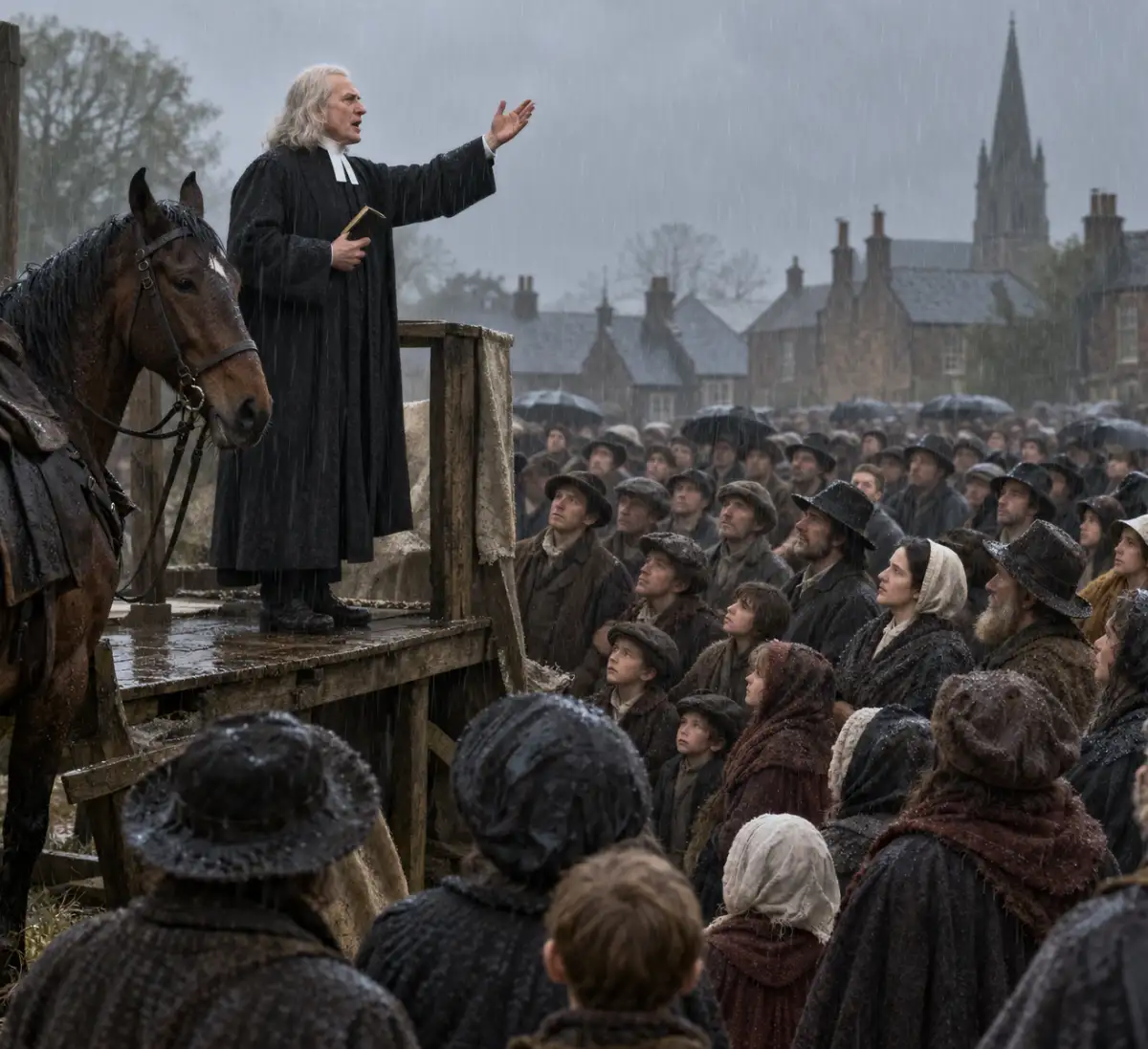
When God moves, nations change! It starts with a man or a movement of men, then grows to be much more.
But God has to do the moving, not men, not our methods.
From what I've learned about the awakenings, it always seems to begin with need — an overwhelming need that our loving Heavenly Father presses into some of His children.
How does that 'need' progress?
Prayer begins, where these children are called to join the Father's heart of care; then, as each follows the path our Lord trod, the child's willingness to sacrifice self for the greater good is felt and cultivated.
What comes out of that? New life!
So it was with John Wesley and his followers. The more you learn of him, the more you see a hungry, willing heart, one that took self-sacrifice and oppression from the powers-that-be to follow what God showed him.
And sometimes, the outcome, by the grace of God, is an awakening! And, in this case, it is sometimes called 'Great.' The Great Awakenings change whole societies when a multitude sees the need to repent of sin and finds new life by following the Savior.
And this began to happen in England in 1739 and endured for the following 50 years of his service, even carried along in these believers after Wesley's death.
But, you must realise that the England of Wesley's day was corrupt, blighted by drunkenness, gambling, self-seeking, and pride. Nothing different from our day, by the way, when sin finds acceptance as the norm.
"Righteousness exalteth a nation: but sin is a reproach to any people."
Proverbs 14:34So what happened to England, its people, and society at the Great Awakening? Among other aspects:
- Social reforms grew--the love of Christ in action grounded in the working class, including women,
- Sunday schools and classes began teaching literacy as well as the Bible,
- Healthcare was begun, and temperance promoted,
- Prison reform was sought from the beginning,
- Poverty programs for the hungry and labour promoted towards giving,
- The push against the evil of slavery.
Books have been written on all this, including the 'what if' category -- it is even said that England avoided a revolution like the French endured because the needs of the working class had been addressed in the revival.
What did it mean for John Wesley?
- 4000 to 4500 miles by carriage or horseback each year--over 50 years of service, some 250,000 miles travelled.
- 40,000 sermons, sometimes given twice a day--most held outdoors.
- vast writing and organisational work, sometimes done in transit, on horseback.
Wesley paid a price. He was opposed by his own church, and so was encouraged to do the unheard-of by fellow itinerant preacher George Whitefield, a friend from the Oxford Holy Club days. So he, too, began to preach out in markets, industrial areas, fields, churchyards, and rented rooms.
What did this ministry cost Wesley?
- Millions, literally! He earned huge amounts through his writings and gave away 98% of all he earned to the programs he began.
- Failed personal relationships and marriage, even with abuse from his wife.
- Exhaustion and weak physical health.
- In other earthly terms, everything...
But the world he helped change for the better was only a by-product. Thousands of converts came to a new personal life through eternal salvation in Christ. These lives were lifted to a higher standard; their purpose for living, like Wesley's, was to follow in the footsteps of the Savior. Pouring out love and care for their community, they became the salt and light the Savior described.
Cost, then, is secondary. The Cross brings its own reward -- and HIS 'righteousness' exalts the nation.
Image: ChatPGT
About author
A retired teacher of English as a foreign language, she loves classical music, hiking in nature, reading, and writing.
She is married to her marvelous husband, Adam, and loves their two children, with two rambunctious toddler grandchildren completing the joy of family.
God has given her countless opportunities to see His goodness through the years together with the challenges life has brought. Those lessons are the subject of her writing.Show less